
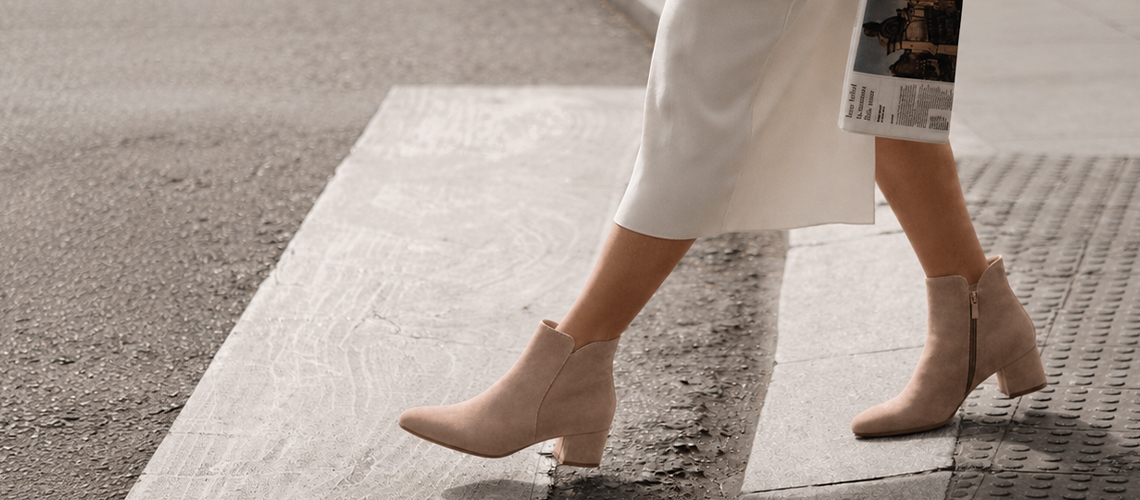
Choosing the rest of the outfit may sometimes seem easier than choosing the shoes that you’re going to wear with them! While a pair may look amazing with trousers, it may seem completely awkward with a dress. Another may seem out of place when the occasion becomes slightly more formal, but can suit relaxed clothing. Thus, an interesting question that must be considered here is, “can one pair of shoes really work with everything?”
Here, a short answer is not quite. Every outfit won’t naturally pair well with a single pair, activity, season, and occasion. Nevertheless, remarkable versatility is generally facilitated by the right pair. Versatile shoes can adapt to a wide range of clothing, instead of matching everything flawlessly. Besides, they maintain their balanced and intentional look.
Shoe shopping becomes much simpler when you understand what creates this kind of versatility.
If someone’s describing shoes as going with everything, it doesn’t mean that with every outfit in their wardrobe. Rather it means that one pair of shoe can work well with a wide range of common outfits and will not create that obvious clash.
For example, one pair of shoes may complement jeans, casual trousers, skirts, and simple dresses as well. Besides, you can find it more comfortable to move between everyday errands, informal gatherings, relaxed meals, and other ordinary activities as well.
Thus, finding a universal shoe is not versatility, it’s more about finding the pair of shoe that works appropriately with a larger section of your overall wardrobe. If you have a varied wardrobe and daily activities, you’ll find it harder to find a single pair that can help you cover every situation easily and appropriately.
Simplicity is one of the strongest characteristics of versatile footwear. You can naturally attract attention with a pair of shoes that features excessive decoration, unusual shape, oversized details, or complicated patterns. While it can’t be seen as a distinctive issue, you’ll find out that styling such pairs is not very easy.
When the silhouette of your dress is simple, you’ll be able to blend it with different outfits better. Clothing can determine the overall direction of the outfit, if your shoes have clean lines and restrained detailing. Such shoes tend to support your look and doesn’t control it at all.
However, this doesn’t imply that versatile footwear is necessarily boring. You can still offer the much-needed personality without making the shoes difficult to combine with other pieces, with small design details, interesting textures, or subtle construction elements as well.
Another major factor that affects versatility is color. The focal point of your entire outfit maybe that one highly distinctive shade that you’re wearing. This also implies that all other colors that you’re wearing must be selected around it. Greater flexibility is generally offered by more understated shades, as they don’t compete with the clothing around.
Nevertheless, the right color is dictated by the wardrobe you have. Firstly, look inside your closet and identify the shades that you wear regularly. Does your clothing mainly consists of muted tones? In such cases, footwear following a similar palette tends to integrate naturally. You can also create visual balance by choosing a restrained shoe color, if you frequently wear stronger colors.
Rather than asking, “What shoe color goes with everything?” ask, “What shoe color works with the clothing I actually wear?” That small change in perspective results in a much more useful answer.
How your shoe interacts with your outfit completely changes due to its silhouette. With some shapes, you can immediately communicate a particular mood. With chunky footwear, you can create a heavier, more casual appearance. On the other hand, narrow or highly structured designs can appear more refined.
Choosing a versatile shoe means that you must choose something in between these limits. While the shape of the shoe looks distinctive enough to look intentional, it should also be restrained enough to complement various clothing silhouettes. Always consider how your selected shoe looks with narrow trousers, wider trousers, skirts, dresses, and even shorts.
Here, proportion is a matter of concern. Shoes and clothing don’t exist independently. The balance of the entire outfit is dependent on the visual weight they carry.
If a pair of shoe doesn’t suit the person wearing it, it can’t be called a versatile shoe. For an individual who spends much of their week wearing relaxed outfits and who walks frequently, their ideal everyday pair may look completely different from someone whose routine involves structured outfits and indoor settings.
Don’t just look for one pair that works with nearly everything. Rather you should consider where you actually spend your time. Always think about your typical week. Ask yourself the following questions:
How often do you dress casually?
How frequently do you attend social occasions?
Do you walk long distances?
Are you regularly indoors or outdoors?
Do your outfits lean relaxed, polished, creative, or somewhere between?
The answers you get dictates your choice of versatility.
Very different impressions are created by two shoes with identical silhouettes, if the material and finish is different. Shoes that have highly reflective surfaces tend to be more noticeable and dress-oriented. On the other hand, soft or textured finishes can appear much more relaxed. The useful space between casual and polished styling is occupied by understated materials.
Texture is another area that matters. With strong textures, you can add personality, but it also creates visual complexity. If your goal is versatility, you end up getting more styling opportunities with a balanced finish.
Practical use too depends on material. While some options are better suited to frequent outdoor wear, others tend to require more attention to maintain their appearance. If you constantly avoid wearing a shoe as its material doesn’t suit your routine, it’s not truly an everyday option to pick.
One side of the equation is style. But if a pair of shoe isn’t comfortable, it doesn’t make the cut. Comfort requirements are different in the case of different individuals. Fit, cushioning, flexibility, heel height, toe shape, support, and overall construction are the key factors that must be considered here. They dictate the feel of a shoe throughout the day.
Always consider when and how long you expect to wear the pair.
The idea that one pair works with everything falls apart when it comes to styling a casual and a formal outfit. Footwear for a formal outfit is different from the one that suits your casual outfits. Additional limitations are added by activities. Footwear that’s crafted for everyday walking is different from the one that’s crafted for exercise, difficult weather, outdoor activities, or specific workplace requirements.
So, don’t just force one pair into every situation, as it tends to be less practical than owning one small selection of shoes with clearly defined purposes.
Literally, no! Different outfits, environments, weather conditions, activities, and occasions call for different footwear requirements. If you’re expecting that a single pair will handle every possible situation, you’re usually involving compromises.
However, if you’re selecting a pair thoughtfully, it may end up working well with a larger proportion of your wardrobe. The key is to look for simplicity, adaptable colors, balanced proportions, practical materials, and a design that reflects your actual lifestyle.
Besides, how your shoe interacts with your clothing is another key area that must be considered. Don’t just focus on the display and how it looks.
Delivering handpicked men’s and women’s footwear that match the lifestyle and needs of Hong Kong.